


Need a control for your device? Let's develop it.
Standard catalogue material rarely fits a point-of-care platform exactly. We build the control around the assay it has to verify, then supply it in bulk.
Send us the device, the analytes and the levels you need. We come back with a feasibility answer and a proposed specification.
Request a custom controlFrom requirement to bulk production
Five stages, each with a clear output you can review before the next one starts.
- 01
Requirement
You describe the device, analytes, levels, volumes and the documentation you need with each lot.
- 02
Feasibility
We confirm matrix, formulation and level design, and tell you plainly what is achievable.
- 03
Development
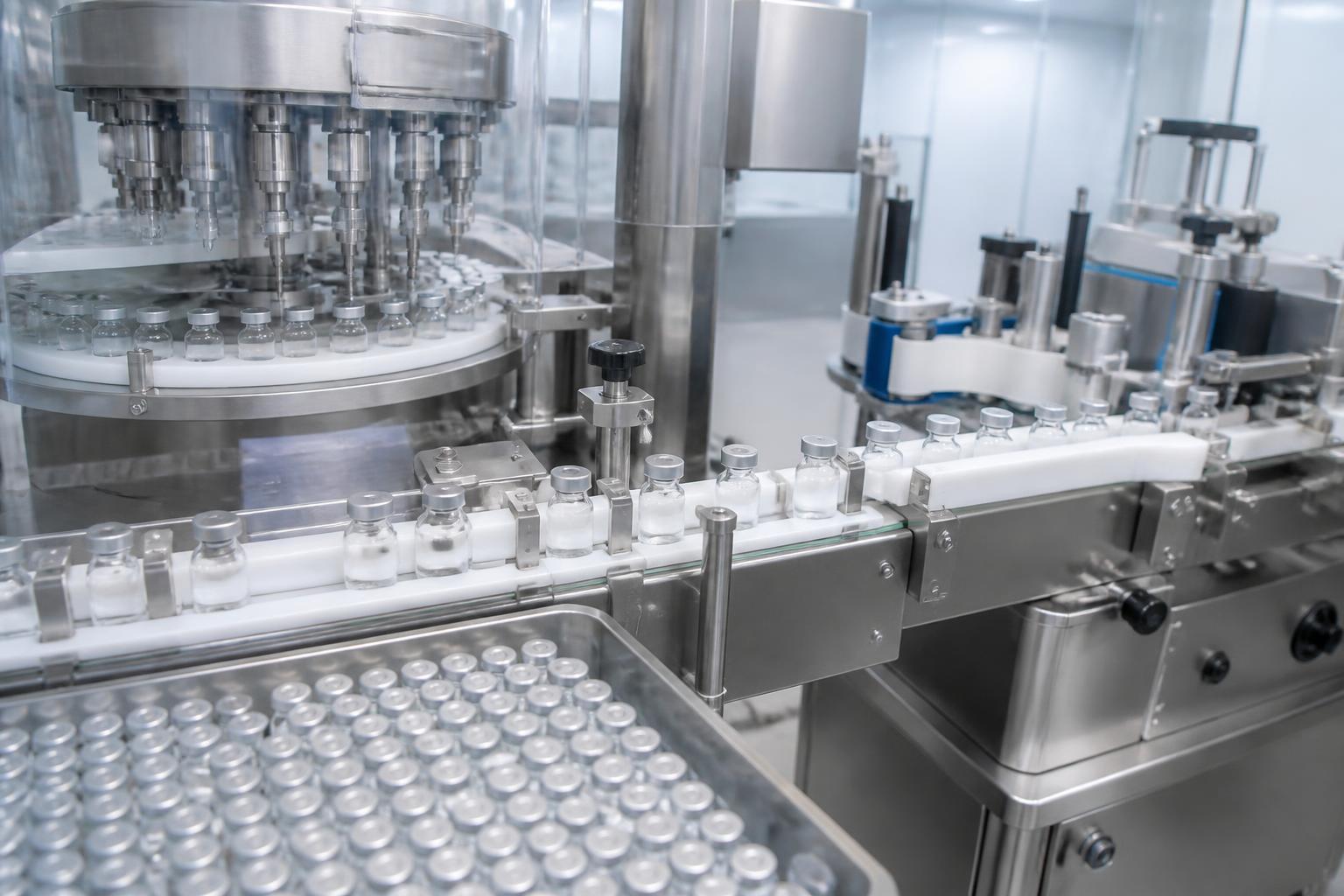
The formulation is built and a pilot lot produced in our own German production facility.
- 04
Validation
Stability, homogeneity and recovery on your platform are tested and documented.
- 05
Bulk production
Repeat lots follow the agreed specification with consistent target values and defined release limits.
Specified according to your requirements
Filling volumes
Vial and bulk volumes matched to how your device consumes control material and how often it is run.
Target values and levels
Levels positioned where they are clinically useful for your assay, with target values assigned per lot.
Single or multi-analyte
One analyte per control, or a combined control covering several analytes in a single vial.
Parameters removed
Leaving out parameters you do not need improves cost efficiency without weakening the check that matters.
Pay for the parameters you use
Removing unnecessary parameters lowers the cost per lot and simplifies evaluation. A programme that only needs CRP and glucose should not be paying for analytes it never reports, and a device with a narrow measuring range does not need levels outside it.
The result is a control that is cheaper to run, quicker to interpret and still fully defensible: human matrix, verified stability, homogeneity to ISO 13528 and release against Rilibäk total allowable error limits.
See how each lot is validated →